





Rating momentum
Aww Great!: 8.1/10 across 1k ratings. Word of mouth is strong — if you like the genre, go for it.
About 30 seconds
Answer four quick questions about your experience.
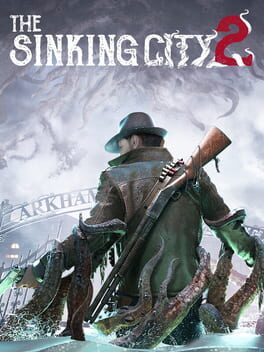
The Sinking City 2 is a 2026 Adventure, Shooter game rated 8.1/10 from 1k ratings, with a main story of about 12.5h, available on Nintendo Switch 2, PC (Microsoft Windows), PlayStation 5, Xbox Series X|S.
Aww Great!: 8.1/10 across 1k ratings. Word of mouth is strong — if you like the genre, go for it.
Leans into Adventure, Shooter, with a main story around 12.5h. Check if that style and time commitment fit you.
72 media reviews
 RATE THIS
While a lot of the basic mechanics and moment-to-moment survival horror of The Sinking City 2 feel inescapably like off-brand Resident Evil, it's a praiseworthy imitation of its main inspirations wrapped in the Cthulhu mythos.
Read full review ↗While the first's open world outstayed its welcome, the second moved on from the city when I'd only just got my feet wet.
Read full review ↗The Sinking City 2 is a solid attempt at the classic survival horror formula that'll please those looking for preposterous puzzle design and tense resource management. A smaller development budget means the performances aren't quite up to the standards of the genre's biggest names, but Frogwares still has an admirable Resident Evil-esque effort on its hands. This is good - sometimes really good.
Read full review ↗Mostly, it’s a solid evolution for Frogwares, and it makes me very curious about their next game. I hope it’s a survival horror, and they find the opportunity and inspiration to really push at the boundaries of the genre, as all the signs point to them having a lot more to offer here.
Read full review ↗The Sinking City 2 is a far tighter, story-driven game - still with exploration and investigations, albeit more limited - than the original. Only really let down by the smallest of niggles, the game features excellent world-building, supported by challenging survival-horror combat and gameplay, decent exploration and puzzles, and a story that is genuinely interesting until the end, with a small but strong cast of characters. Fans of the original may be missing the open-world and detective focus, but the trade-off and direction of this stand-alone sequel feels right, and performs brilliantly.
Read full review ↗If you can put up with some poor combat and areas overstuffed with repetitive enemies, The Sinking City 2 is well worth fighting against the tide in the end. I enjoyed the story and the exploration, and the areas are honestly close to being as good as its inspiration. It needs some balancing, and it’s downright questionable that an entire DLC featuring an entire new area came out near launch, but I’m very glad I got to play this one.
Read full review ↗The Sinking City 2 delivers strong Lovecraftian atmosphere, impressive visuals, and satisfying survival horror mechanics, but its momentum falters in the latter half. Repetitive enemies, frequent encounters, and forced evasion undermine the otherwise engaging combat and exploration, leaving a promising sequel that falls short of its excellent opening.
Read full review ↗The Sinking City 2 left me with mixed emotions. The developers nail the world design, lore, and audio incredibly well, but the erratic nature of its level connectedness, lack of actual investigation, and staccato story flow will keep you painfully confused. It left me with a sinking (pun unintended) feeling about all the things it could have gotten right to make it a stalwart in its genre. As a sequel, it goes two steps forward but takes one step back. Frogwares’ The Sinking City 2 might feel a little rough at the seams, but it’s a bold step in the survival horror genre. The game betters its combat, scares, and atmosphere from its predecessor and manages to hold on to its dark linear narrative till the very end. A confident sequel that begs for the adage: third time’s the charm.
Read full review ↗The Sinking City 2 understands something its predecessor occasionally struggled to recognise: more is not necessarily better. Frogwares could have answered the original's shortcomings with a larger map, more activities, and a greater commitment to its open-world structure. Instead, it has made the more difficult choice of cutting back. The sequel is smaller in scope, but considerably more deliberate in how it uses that scope. That restraint is the foundation of a much stronger game. Exploration, investigation, and combat no longer feel like separate ideas competing for the player's attention; they now support a common rhythm. Combat remains conventional, but its precision, readable enemy design, and weak-point system give encounters a welcome degree of tactical depth. Boss fights build on those foundations effectively, demanding greater awareness of patterns, timing, positioning, and resources when the difficulty is raised. The biggest improvement, however, may be found in the spaces themselves. The open-map structure gives Frogwares greater control over density and pacing, allowing locations to be built around meaningful routes, secrets, resources, and environmental storytelling rather than simply providing another stretch of world to cross. The sequel understands that an environment does not need to be enormous to feel expansive; it needs to give the player a reason to explore it. Investigation has undergone a similarly measured transformation. Frogwares has reduced the complexity of its puzzles without stripping away the investigative core of the series. Evidence still needs to be examined, connections still need to be made, and the player is still encouraged to participate in the process of uncovering the truth. The result is less demanding than before, but arguably more consistent with the game's broader survival-horror structure. It is the writing, though, that ultimately gives these systems their context. The Sinking City 2 understands that Lovecraftian horror is not simply about monsters, forbidden rituals, or ancient entities. It is about what happens when the pursuit of knowledge begins to undermine our ability to make sense of what we discover. Calvin's search for Faith gradually opens onto the Slither and a much larger cosmic conflict, with each revelation providing answers while simultaneously making the world less comprehensible. Frogwares is particularly effective when it resists the temptation to explain everything. The final act leaves several questions unresolved, allowing uncertainty to remain part of the horror rather than treating every mystery as a problem that requires a definitive answer. The journey to Antarctica, drawing directly on the imagery and ideas of At the Mountains of Madness, takes that philosophy even further. Away from Arkham's familiar streets and institutions, the game places Calvin in a landscape where isolation and scale themselves become sources of unease. The sequel still has weaknesses. Its technical performance is the clearest blemish, particularly on PC, where frame-rate drops can occasionally interfere with combat and shader compilation can produce unwelcome interruptions. Some loading times are also longer than they should be, while ammunition management is not always ideally balanced. A handful of puzzles, meanwhile, feel less developed than the stronger investigative sequences. None of these problems is catastrophic, but they are enough to keep the game from achieving the level of consistency its best moments suggest is within reach. What matters is that these shortcomings exist within a fundamentally stronger vision. Frogwares has not tried to solve the problems of The Sinking City by making the sequel larger or more elaborate. It has solved them by becoming more selective. The result is a game that knows what its different systems are for, how they should interact, and – just as importantly – what they should leave out. That makes The Sinking City 2 more than simply a better version of its predecessor. It is the point at which the series' two defining identities finally become compatible. Investigation gives the horror context; horror gives investigation consequence. Exploration creates the opportunity to discover something; discovery creates the reason to fear what comes next. There is still room for Frogwares to refine the formula, and the sequel's technical shortcomings prevent it from reaching the highest tier of the genre. But as a statement of direction, The Sinking City 2 is remarkably clear. This is a series that has finally found a shape capable of supporting its ambitions. And perhaps that is the most fitting conclusion for a game so concerned with forbidden knowledge. The greatest horror is not necessarily what waits in the darkness. It is what we discover when we decide to look into it, and the growing suspicion that some truths are frightening precisely because they can never be fully understood. The Sinking City 2 knows that the search for answers is not always a path towards certainty. Sometimes, it is the path towards madness.
Read full review ↗